Tuesday, 30 June 2020

Helen MacInnes again: 'Message from Malaga' and 'The Snare of the Hunter'

Having another break from my early 19th century Scottish novels etc., I have returned to Helen MacInnes and put two more of her spy novels 'under my belt'. The first, Message from Malaga (1972), is a much angrier book than its predecessors.  Its theme is similar - the threat from totalitarian, usually communist, powers - but there is also obvious contempt for the wastrel youth of the USA and, for once, the (amateur) American hero does not end up with the pretty American girl, because she is killed!

    
                           First edition -  1972                                      Fontana paperback - 1973

Thirty-seven year-old Ian Ferrier, on leave from the US Space Agency, is sitting with his old buddy, Jeff Reid, in the back courtyard of El Fenicio, an inn in Malaga, waiting for a display of flamenco dancing to begin. Tavita, Jeff's friend and dynamic performer (and owner of the complex), is to be the star of the evening. Then trouble begins - Tomas Fuentes, a 'defector' from Cuba who has been brought through an underground route, is introduced by Tavita to Jeff. The latter is actually in the CIA and is tasked to help Fuentes, who turns out to be a ruthless Soviet agent, trying to bargain with the USA. In typical MacInnes style, Jeff is subject to a vicious assault (he later dies in hospital, after another attack). Not before, however, he has passed on incriminating information about Fuentes, verbally and through a mini tape hidden in his cigarette lighter. From then on, Ferrier is drawn into an increasing dangerous whirlpool of espionage. The action moves from Malaga to Granada and the Alhambra, where a lethal battle of wits is finally fought out.

The Dedication is For my friend Julian a man who has never given up the ship. One assumes MacInnes means the 'fight for freedom' against Communism. Certainly, the book repeatedly emphasises the dangers: 'Don't take anarchists or communists as your political bedfellows unless you want to wake up castrated'. The twentieth-century experience [Ferrier] thought. 'But the radicals never learn , do they?' Reid is clear in his mind: The things that never get known, that can't be published unless you want to throw people into a panic; the things that stand in the shadows, waiting, threatening; the things that have to be faced by some of us, be neutralised or eliminated, to let others go on concentrating on their own lives. MacInnes turns on the bitterness: The new American life style, squalid and sleazy and soft. Capitalist self-indulgence, imperialist decadence; it's all on the point of collapse - with calculated violence and the threat of terror to help, of course. A push here, a shove there, and it falls apart. America is up for grabs. The tough-minded will win, and it is no longer fashionable for America to be tough. She ramps up the importance of agents: he's your man, out on point duty, your first line of defence...what use are the brains of government if they haven't ears and eyes they can trust in far-off places?

There are several Americans who have turned traitor - Lee Laner, a supposed 'hippie but actually a KGB killer (he is the first to attack Reid but is subsequently bumped off by his own side); Gene Lucas, tall narrow-shouldered, fairly young - who is another communist undercover. Worst of all is Ben Waterman, an American Ferrier had first met in Korea then in Washington in the 1960s. He proves to be the arch-traitor and boss of all the others. Thank goodness for 'Smith' (actually Bob O'Connor, who Reid had wanted contacted) and a young henchman 'Mike'. They are the straight-guy CIA professionals who win in the end! Additionally, there is the slimy Spanish Dr. Medina who aids the communist agents and Captain Rodriguez, the Spanish policeman, who pursues his own course of justice - another typical 'good guy' supporting the Americans

Amanda Ames, the usual pretty girl turns up - brunette...one hundred and twenty pounds, five feet four in flat-heeled sandals, thirty-six, twenty-four, thirty-six, all pleasantly disposed of in the right proportion. She had a merry smile, too... She is not another amateur this time but an American agent. Ferrier semi-falls for her, but her American boss, Martin, is actually another two-faced, double agent. We don't meet Amanda until page 109 and then she is not seen again until page 260; the reader's antennae twitch - is she, for once, not going to end up with the hero and she really was a stunning girl? In fact, she dies, with her neck broken, murdered by the communists.

The second book - The Snare of the Hunter (1974) - sees MacInnes back to her best; it is not as claustrophobic as Message from Malaga, and, although the evil ones are the communists yet again, the story is redolent of the period, concentrating on an escape across the Iron Curtain (or barbed wire) from Czechoslovakia, then under the control of the Russians and into yet another year of show trials. 

   
                            First edition - 1974                                  Fontana paperback - 1976

Irina crosses through the wire from Czechoslovakia into Austria in July 1972, leaving behind her recently divorced husband, Jiri Haradek, a high-ranking officer in the political police. She looks forward to joining her father, Jaromir Kusak, a world-famous author who has found secret sanctuary in the West. One of those helping her is David Mennery, whom she once loved when they were both teenagers, an American music critic who was persuaded to cross the Atlantic to help her get to her father, now in Switzerland. The flight, from Vienna through Austria to Switzerland is well-described with major problems along the way.

It wouldn't be a MacInnes thriller unless there were twists and turns, which include obvious communists, traitors and good American amateurs. Two brothers Josef and Alois are killed in the early stages - one at the actual frontier barbed wire, the other thrown out of a window. Both the victims of Ludvik Meznik, seemingly on their side but actually working for Jiri Haradek. There is also the arch-traitor, Mark Bohn, an American journalist and apparent 'friend' of David Mennery. Although he dislikes any 'rough stuff', especially if it leads to a death, MacInnes make it clear that she has utter contempt for his 'type'. They figure in several of her novels I have already re-read. The story is unusual, in that both the CIA and the British MI6 have backed off from helping and it's a mixture of American and British amateurs who succeed in reuniting father and daughter. There is the inevitable pretty girl, Jo Corelli, who for once does not link up with Mennery, as the old love is rekindled with Irina; Hugh McCulloch and Walter Krieger, who are all friends of the author and who all play vital parts in foiling the baddies.

MacInnes' description of the Austrian and Swiss towns and the car chases ensures the novel is not just another one of her diatribes against the communists. The tension builds steadily and surely to a climax. There is also, for the first time I think, a sexual element: Mennery sleeps with Irina - they are not yet married even though both are divorced: He turned away from the window, came over to the bed where she lay outstretched, face half-buried in the pillow, hair loose and golden, a twist of sheet barely covering her hips. Lightly, trying not to wake her, he kissed her neck, her shoulders; felt the smooth curve of her waist, the gentle roundness of her breasts...her arms went round him, pulling him towards her, her lips meeting his. This is raunchy for MacInnes!

The band of friends all survive, even if Krieger ends up in a hospital bed; and Jiri Haradek (who had planned the whole escapade with the intention of kidnapping Jaromir Kusak and (probably) killing everyone else) returns to Czechoslovakia to a certain show trial and execution. I positively enjoyed the novel, more so than the previous one. A plus was that in the front of my book is stuck a small headed notepaper, signed by MacInnes herself!


Saturday, 27 June 2020

The Bristol Riots of 1831 - two very different novels (2)

The second novel dealing with the Bristol Riots is by Stanley J. Weyman, an author I read first at Prep school and whom I have collected for the last forty years. I now have all his works in first edition, several of them with dust wrappers and some inscribed or signed. I recently produced an Illustrated Bibliography of his works, which includes letters sent by him to various people.

          
                                1st edition - 1906                         Stanley Weyman (1855-1928)

Weyman was a best seller in his heyday, both in the UK and the USA. From his first major success - A Gentleman of France in 1893 (he had already published three books) - he brought out a series of novels usually set in Europe, more often than not France, which the public lapped up: The Man in Black (1894); Under the Red Robe (1894); My Lady Rotha (1894); The Red Cockade (1895); Count Hannibal (1901); The Long Night (1903); and The Abbess of Vlaye (1904). Less successful were the stories set in England: Shrewsbury (1898); The Castle Inn (1898); Sophia (1900); and Starvecrow Farm (1905). Weyman himself felt that Shrewsbury was probably my least successful work. The narrator proved to be a poor-spirited craven; and the Duke of Shrewsbury, whom I proposed for hero, lacked, I fear, vital force... Reading them over the years, several of them more than once, I beg to differ with the late 19th century public - I rather like the ones set in England!

In 1906, he brought out Chippinge (Chippinge Borough in the USA), exactly 20 years after Mrs. Emma Marshall's Under the Mendips.  Like her, he aimed to place the Bristol Riots of 1831 centre stage towards the end of the book. Unlike her, there was little, if any, didactism and no evangelicalism. Weyman was a churchwarden at St. Meugans, near Ruthin in North Wales, and read the lesson there for many years. Like Mrs. Marshall, therefore, he was a staunch Anglican, but he did not let that affect (infect?) his writings to the same extent. Weyman wrote about Chippinge in a long Introduction to a 20 Volume (later 24) Thin Paper Edition of his Novels in 1911. He used the diaries of Croker, Creevey and Greville; biographies of Campbell, Lord John Russell, of Robert Peel and Brougham (who is a seminal figure in the novel); and more general Histories for his knowledge of the facts and opinions of the 1820s/1830s. I made an earnest effort to convey to my pages some of the aroma of the days which saw the first frock-coat, the first railway, and the first Reformed Member...I tried to depict the attitude of mind towards [Reform] of different classes - the despair of those who looked back, the hopes of those who looked forward, the ardour of the young, the doubts of the old...

The description of Chippinge, the 'rotten borough' at the centre of the tale, I recognised was based on Malmesbury (and pleasingly confirmed by Weyman in that long Introduction), lying as it does but 10 miles from the Bath Road and Chippenham: the town occupies a low, green hill, dividing two branches of the Avon, which join their waters a furlong below. Built on a ridge, and clinging to the slopes of this eminence, the stone-tiled houses look pleasantly over the gentle undulations of the Wiltshire pastures...of the Mitred Abbey that crowned the hill, and had once owned these fertile slopes, there remained but the maimed hulk, patched and botched, and long degraded to the uses of [the] parish church. In reality, Malmesbury (like the fictitious Chippinge) had sent two M.Ps to Parliament since 1275, but was to lose one of them in the 1832 Reform Act and the other in 1885, when the constituency was abolished.

The story revolves around one Arthur Vaughan, late of the 14th Dragoons, who wants to become an MP. Thanks to his uncle, Sir Robert Vermuyden, he has a steady income, the prospect of inheriting the family seat and the patronage of the borough of Chippinge. Meeting up with the Lord Chancellor, and strong proponent of Reform, Lord Brougham (old Wicked Shifts) further inspires him. He also bumps into another real-life figure, Sir Charles Wetherell, a die-hard but sincere reactionary. Both are to be important to him later in the story. Vaughan is an equally sincere believer in reform, which ensures a major rupture with his uncle and a loss of his inheritance. He stands as a Reformer and gets elected as one of the two MPs for Chippinge, much to his uncle's and others' anger.

Entwined with this political saga is the love story: Vaughan books an outside seat on the Bristol White Lion coach, which passed through Chippenham, where he intended to alight for Chippinge. Seated next to him is a young lady: a miracle had happened...in his mind...he was saying "What eyes! What a face! And, oh Heaven! what beauty! What blush-rose cheeks! What a lovely mouth!" Well, it takes over 300 pages, (the course of love rarely runs smooth), but they unite in the end. It was claimed that Weyman couldn't write about women. Nonsense! Mary Smith, the demure and badly off school mistress, who doesn't know who her parents were, is to be transformed into Mary Vermuyden, the rightful heir to the estate once thought to be Vaughan's. It is not long into the book when the reader guesses this is the case; but, no matter. There are other, well-drawn characters (which cavilling readers might say bordered on caricatures, but many real-life people are that too): Mary's estranged - and, dying - mother Lady Sybil, who her father cannot forgive for her flightiness and running away from him, ends up being cared for by her daughter on her death bed; Mary's boss, who runs a small school in Queen's Square, Bristol - the formidable (but, really, lovable!) Miss Sibson, a tall, bulky woman, with a double chin and an absurdly powdered nose, who wore a cameo of the late Queen Charlotte on her ample bosom. There is the Honourable Bob Flixton, the necessary 'baddie' who tries to upset Vaughan's chances with Mary but only succeeds in ensuring he is despised by both; and a sympathetically-drawn Colonel Brereton, who in real-life failed in his duty of protecting Bristol from the mob, was to be court-martialled but pre-empted this by committing suicide.

Vaughan, whose incipient priggishness makes him more human and not just a cardboard cut-out hero, does not distinguish himself in the House in his maiden speech (shades of Disraeli?) but is the hero of the moderate class in the Bristol Riots, leading where Colonel Brereton failed to do, thanks to his own stint as an army officer. His bravery and steadfastness leads to his uncle accepting him again and Mary forcing him to come down off his proud horse to accept her. 

Weyman, a county magistrate in Ruthin, is clearly on the side of law and order and, like Mrs Marshall, has little time for the 'rabble'. However, he is equally out of sympathy with the reactionary diehards, even if he understands why they are what they are. Chippinge is a political book, with a love story thread; Under the Mendips is a love story, placed in an evangelical format, with some politics. 

The Bristol Riots of 1831 - two very different novels (1)

I have just finished reading two novels which lead up to the Bristol Riots, which occurred in the Autumn of 1831. Both deal, in some detail, with the violent events which broke out in reaction to the news that the Reform Bill, sweeping away most of the corrupt/'rotten' boroughs, had been  turned down by the House of Lords; both have a young, beautiful girl as a 'heroine' who is pursued by an upstanding youngish man.  Yet the novels are very different in approach and purpose.

    
                                     1st edition - 1886                  Emma Marshall (1830-1899)

Emma Marshall was a prolific writer of stories; between 1861 and her death she had written over two hundred. Born near Cromer, daughter of a banker and a Quakeress, she was educated at a private school until the age of sixteen. In 1849, she left Norwich with her mother to live at Clifton, Bristol. She married Hugh Marshall in 1854 and had nine children, all girls! She took in schoolchildren as boarders. The collapse of her husband's bank in 1879 saddled the family with huge debts. Rather like Sir Walter Scott, she wrote to pay these off.  Apparently, during her lifetime she had more fiction titles on the shelves of Mudie's subscription library than any of her contemporaries, including popular writers for boys and Charlotte Yonge herself.

Her Quaker background and her increasing attachment to the Anglican Church (a member since 1852) shone through in her dedication to a life of energetic activity, public service and charity, personal responsibility and morality, education and peace. It shines through in Under the Mendips, the only one of her books I have read. I bought it, thinking to link it with Walter Raymond's Two Men o' Mendip (Longmans, Green, 1899) and Under Cheddar Cliffs (Seeley, 1903) by Edith Seeley, which I read and blogged about recently. The book commences in 1824 and covers the years until 1832. The scenes switch between Fair Acres Manor, a family home lying between Wells and Cheddar; Wells itself, including the cathedral, Vicar's Close and the Bishop's Palace, with an avuncular bishop who, however, opposed the 1831 Reform bill; and Bristol. Also playing a prominent part is the aging Hannah More, who greatly influences Joyce Falconer, the 17-year-old heroine. The former's home at Barley Wood is the scene of much hero[ine] worship by the author. The rough Mendip folk are also introduced - there's a deal of ill-blood in them parts... Even the hero, Arundel, says they look little better than savages, and would knock any one on the head for a trifle. As Joyce herself remarks, there are a great many discontented folks, who seem to think the gentry are their natural enemies. Mrs Falconer has no time for their rough and evil ways. In fact, one is responsible for Joyce's father's death. Her father, Arthur Falconer, sat in judgement on him at the Wells court and pays for it on the Mendip moors some time later. Even Mrs More has to admit, the Mendip miners give me the most uneasiness; they are so rough, and wild, and lawless.

The mother has no time either for Mrs More's platitudes and ideas of educating the common herd: she liked things as they were, and was averse to change, lest that change should be for the worse... teaching lads and lasses to read and write was, in the opinion of Mrs. Falconer, a crying evil.
Joyce's eldest brother, 23-year-old Melville, is a weak cad, spoiled by his parents and, back from Oxford University, petulant, sneering and almost entirely forgetful of the interests or tastes of anyone but himself, and he had never given up his own wishes for the sake of another in his life. It's not all bad: Piers, a younger brother (cruelly injured aged eight through his father's thoughtlessness and now having to use crutches) was the most cheerful and most uncomplaining member of the squire's household...every bird and insect had a charm for him...  and who adores his sister: while I have you, Joy, I can bear anything. Another brother, Ralph, takes over the running of the estate on his father's untimely demise. There is a cousin, Charlotte, who lives with her spinster aunt in Vicar's Close and was somewhat given to sentiment and languishing, complained of being fatigued, of headaches, and low spirits. Then there is Mr. Gilbert Arundel, lover and then husband to Joyce, who becomes a hero during the Bristol Riots. Also an inevitable 'baddie', Lord Maythorne, who is not only responsible for Melville's misdemeanours, but attempts to influence Joyce in a malign way.

The gift of a Bible to Joyce from Mrs More is a central point of the story's message. It contained many pencil markings by the old woman; but Joyce has to hide it from her mother - she did not give you any tracts, I hope...I won't have any cant, and rank Methodism here. The novel is suffused with pious thoughts and sentences and, occasionally, they grate on a 21st century mind. It can descend to a cloying level:  Joyce's features were regular, and her complexion rosy and healthy. Indeed, everything about her seemed to tell of youth and the full enjoyment of the gifts which God had given her. When Joyce and Arundel are lost on the Mendips in the dark, the latter says, fervently: I am not afraid for God is with us. The death-bed scene of Mr Falconer, is worthy of the treacle of the stage version of East Lynne's Gone, and never called me mother! There are too many of these purple passages. However, one must remember not only Marshall's piety, but that she is writing in 1886 not 2020. She is not as didactic as, say, Emily S. Holt but charts a similar course to Charlotte Yonge, Frances M. Peard and others. 

Emma Marshall's evangelical message ensures that the uncouth Mendip miner has a 'good', recanting end; his daughter ends up as a 'good' servant to Joyce in Bristol; the two extremes represented in the Bristol Riots are frowned upon; and even Melville 'improves' to a certain extent. Marshall is also effective at describing the environs of Wells, with one scene of bull-baiting in the Market Square (which only ceased in 1839), and (particularly) Clifton of the early 19th century; moreover, the chapters dealing with the Riots in Bristol in October 1831 (with  such chapter headings - The Storm Bursts, Tumult, "Fire seven times heated") are well done. She quotes, to good effect, the boy Charles Kingsley's reminiscence of the event (this boy, who was one day, to be the foremost in the ranks of those who carried the standard of truth, and justice, and charity into the very thick of the conflict with the powers of darkness).

As a final aside: Mrs Marshall does comment on the positive changes between the 1820s/1830s and her time of writing, the 1880s, but she also has criticisms. I think this self-sufficient, dogmatic criticism is very much on the increase, and that the little jealousies and rivalries amongst men and women who follow the same profession in art or literature grow more frequent. Tongue and pen are often both too sharp; and the superficial chatter about books and authors, pictures and music - both English and foreign - is too often passed as the real coin of the great realm of literature, when it is but a base imitation, stamped, it may be, on a showy surface with the same token, but utterly worthless when the first brilliancy is worn off. So there!

Perhaps it's best not to draw attention to Mrs Marshall's comment about the great Edward Colston [who] first proposed to begin the good work of education in Bristol... How times change, and not necessarily for the better!

Tuesday, 23 June 2020

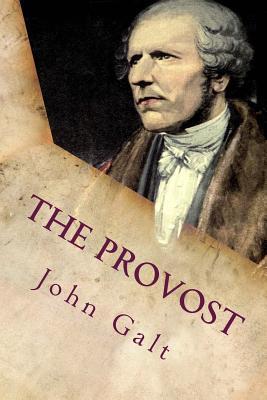
John Galt - The Provost (1822)

Back to John Galt; this time to The Provost, published the year after his successful The Annals of the Parish and The Ayrshire Legatees. I have now read three of Galt's novels and, I must admit, he 'grows' on me. The format is similar to the Annals, in that it is told in the first person (apart from a brief Introduction) who, again, thinks rather highly of himself! James Pawkie starts out in Gudetown as an apprentice to a tailor, Mr. Remnant (most of Galt's surnames are, like Dickens, always indicative of a certain humour, e.g. Mr Keg, who engaged in illicit trade; Mr Shovel, a quarryman; Mr. Rafter an architect; William Plane, a joiner; Mr Pipe, the wine-merchant; Mr Dribble, an inn-keeper). Pawkie then takes up a corner shop at the Cross, facing the Tolbooth, and marries well - his father-in-law, dying the following year, left a nest egg, that, without a vain pretension, I may say we have not failed to lay upon, and clok to some purpose.  Pawkie's rather smug reminiscences make it clear he may well have served his community but, rarely at his own expense and more often with an eye to a main chance. How like these days, in all levels of 'government'.

                      First edition - May 1822

As events occur in the town, such as the deaths of important figures, Pawkie is there to make the best of it. He gets a seat on the council (having said grace at a Bailie's wake, that I could see made an impression). He bamboozles others on his way to becoming Dean of the Guild and, on three occasions, Provost. Thus is Bailie M'Lucre  - a greedy bodie - (another apt surname) manoeuvered out of office, which Pawkie adroitly fills. Another, Bailie Weezle, was a man no overladen with worldly wisdom and is easily manipulated; Bailie Booble makes a fool of himself over a supposed French spy; the town clerk is outwitted; Mrs Pawkie does a good turn to a widow and, when the latter (as with the Ayrshire Legatees) gets a legacy from India, receives divers matters of elegance...year by year. Pawkie is justly proud of his role in improving the streets of the town; in bringing in better lighting; and building a new school (no matter that his property adjoined the new site and gained a decent wall etc. from the move). He is at the forefront, as was Mr. Balwhidder, in the formation of the Volunteers; and, typically, gets the commision for uniforms. Pawkie's response to any charge of corruption was I have endeavoured, in a manner, to be governed by the spirit of the times in which the transactions happened. Pawkie cleverly ensures that the danger of a local radical newspaper is soon transformed into a conservative organ.

There are fewer Scottish words to puzzle over, than in his previous two works, which was helpful for the flow. Galt actually mentions the Annals in the book: and the same is spoken of in the Chronicle of Dalmailing...at the stormy placing of Mr. Balwhidder.  There is more humour which is recognised by Pawkie, unlike Balwhidder in the Annals. ...there was a sort of itch of it among a few of the sedentary orders, such as the weavers and shoemakers, who, by the nature of sitting long in one posture, are apt to become subject to the flatulence of theoretical opinions...

Above all, Galt provides us with entertainment at Pawkie's (knowing/unknowing?) expense: I was to be sure, now and then, subjected to opposition, and squibs, and a jeer; and envious and spiteful persons were not wanting in the world to call in question my intents and motives, representing my best endeavours for the public good as but a right-handed method to secure my own interests. Pawkie has the last laugh, by getting a greenhorn, Mr Mucklewheel the hosier and brand new to the council, over a glass of toddy, to ensure he is given plate and a Vote of Thanks on his retirement. Pawkie retires, sure that Posterity, therefore, or I am far mistaken, will not be angered at my plain dealing, with regard to the small motives of private advantage of which I have made mention...

The period spans from the early 1780s to the Michaelmas of 1816.

Saturday, 20 June 2020

Sarah Hawkswood - the Bradcote and Catchpoll mysteries

I bought the first two paperbacks in the series many months ago - from a Charity shop in Ashby de la Zouch.  They have lain by my bedside table ever since. Then, I recently bought the rest on EBay in a collecting frenzy. I think I now have them all right up to date, viz.: (paperback dates only)

2017    Servant of Death          2017    Ordeal by Fire          2018    Marked to Die
2020    Hostage to Fortune      2020    Vale of Tears            2020    Faithful unto Death
2020    River of Sins (due in November)


Hawkwood's first book is set in June 1143, eight years into what we call 'The Anarchy' - the civil war between King Stephen and the Empress Matilda - and 11 years before it ended. The story takes place entirely in the environs of Pershore Abbey (there is a simple but useful plan of its buildings) and details the murder of The Lord Bishop of Winchester's clerk, who brought quite a bit of historical animosity with him. Found in front of the high altar, spread out in the form of a cross, Eudo could have been killed by one of several suspects. The tale introduces Serjeant Catchpoll (we never learn his Christian name) a sniffer of criminals, a man who could track and out-think the most cunning of law breakers by the simple expedient of understanding the way that they thought but being better at it. William de Beauchamp, sheriff of the shire, and Catchpoll's boss, is a supporter of Matilda and there is a suggestion that spying for her comes into the equation. There is a tinge of romance between Sister Edeva, a Benedictine nun from Romsey at Pershore to bargain for a relic (the bone of a finger oif St Eadburga), and the new (acting) under-sheriff Hugh Bradecote, who does not appear until page 51.
There are some interesting characters involved: Elias of St Edmondsbury, a master mason; Miles FitzHugh, a young squire; Waleran de Grismont who was 'courting' Isabelle d'Achelie (and who hopes to get King Stephen's consent to a marriage), a young widow with a depressingly mundane late husband; Margery Weaver, also a widow but now running a successful wool trade between the Welsh Marches and Winchester; and a few others. The story is quite well told; it was increasingly obvious who the murderer had to be, even though red-herrings were strewn.

Ordeal by Fire, the second story, is set in Catchpoll's home town/city of Worcester. It concerns a series of fires, started deliberately by a tall, hooded male with long feet. I guessed very early on who the arsonist was, but the linkage between the targets was only gradually released. I preferred the first story to this one, as I found it hard to empathise with the characters. Bradecote had just lost his wife in childbirth and a young girl is burnt in one arson attack, but no deep emotion is stirred. I will read the others in the series and comment on them, but will have a break. Allison and Busby should be congratulated on publishing a clutch of writers of historical who-dunnits:  I have the entire sixteen volumes of Edward Marston's Nicholas Bracewell series and his five books in the Daniel Rawson tales. All are easy-to-read books and probably easy-to-write!


Saturday, 13 June 2020

John Galt - The Ayrshire Legatees 1821

First edition -  June 1821

I must admit, I didn't enjoy this John Galt novel as much as I did The Annals of the Parish. The story is pretty straightforward. The Rev. Zachariah Pringle D.D., minister of Garnock (between Irvine and Kilwinning) receives a letter from India, informing him that his cousin, Colonel Armour, had died at Hyrabad, leaving him his residuary legatee. Off he sets for London, with his wife Janet, daughter Rachel (who now has a prospect before her) and son Andrew, who had just been called to the bar.

The majority of the book takes the form of letters posted back by all the four members of the family.  Dr. Pringle writes to Mr Micklewham, schoolmaster and Session clerk,  who is regularly told to give alms to the poor. Mrs Pringle, who has awful spelling (sometimes harder to work out than the Scottish words) writes to Miss Molly Glencairn, worrying always about actually receiving the nest-egg; the daughter writes to Miss Isabella Todd about the sights of the city, the shopping and her increasing attachment to one Captain Sabre of the Dragoon Hozars, who came up in the smak with us from Leith - she ends up marrying him and goes off to Paris with both her husband and brother; and Andrew sends letters to Rev. Charles Snodgrass, affecting to be quite 'a man about town' and commenting caustically on the Whigs.

They talk of their journey to Glasgow then Edinburgh; a rough sea voyage from Leith to Gravesend; 
there are adverse comments about the English episcopacy and their trip to Windsor for George III's funeral; they visit the Tower of London and Westminster Abbey, where they have a living-likeness of Lord Nelson, in the very identical regimentals that he was killed in. Opinions are sent on William Wilberforce, Sir Francis Burdet, the Marquis of Lansdowne and Lord Liverpool, Lord Erskine  and Lord Eldon - Eldon is the better lawyer...Erskine is the greater genius. London is assessed shrewdly: Living on the town, as it is slangishly called, the most friendless and isolated condition possible, is yet fraught with an amazing diversity of enjoyment.

Rev and Mrs Pringle return home and Mr Snodgrass is declared helper, and successor to the doctor, his marriage with Miss Isabella Todd will take place with all convenient expedition. The Pringles, meanwhile, are to move from the Manse to an elegant house. All well that ends well. A slight tale but quite well done.

Ian Campbell has, as usual, some useful comments on the novel: the central difference between this novel and the more famous Annals: where Micah Balwhidder's character is the sole filter of the event described there...here we have more than one character experiencing the change, and more than one character receiving and responding to their best estimate. The Ayrshire Legatees may look like a slim book but it is an extraordinarily rich one. It passes experience from level to level, and comments on it throughout...The metropolitan world is always at second-hand via letters, the Garnock world at first-hand via personal responses... Campbell also draws out the satire in the book and the tensions within the family (father and son) and between the various characters in Garnock.  By sharply setting up multiple layers of plot, and poking fun at everyone through his writing, Galt holds the reader's attention most skilfully while making his social points.

Tuesday, 9 June 2020

My Illustrated Bibliographies

For several years now, I have been producing A Collector's Illustrated Bibliography of my favourite authors. The booklets range from 40 to 64 pages and I reproduce the covers below. My John Buchan Collection is simply far too large to put into one booklet, but I did edit a professionally produced one by Avonworld Books in 2008. I also bring out a regularly updated Buchanalia which details my entire Buchan holdings. I don't envisage producing booklets on my Sir Walter Scott or Robert Louis Stevenson Collections, but may do ones on Daphne du Maurier, Mary Webb and Nineteenth Century Scottish authors.