Monday, 31 May 2021

The Fifty Great War Films: A Critical List


The book that started it all.


I have tried to place the films in four categories: Very Good; Good; Average; and Below Average. Only five were placed on the bottom rung, mainly because I found them boring. I was going to have a Top Five, but I couldn't decide on which of the Seven to drop. I have watched 48 films in 5 months and, although I wrote up reviews almost immediately after watching each one, inevitably memory can be blurred about quality. If I watched them again, I might shift some of them into different categories. It's a very subjective, personal listing and I am sure others would come up with very different ones.

VERY GOOD: 7

1943: The Life and Death of Colonel Blimp
1957: The Bridge on the River Kwai
1979: Apocalypse Now
1985: Come and See
1998: Saving Private Ryan
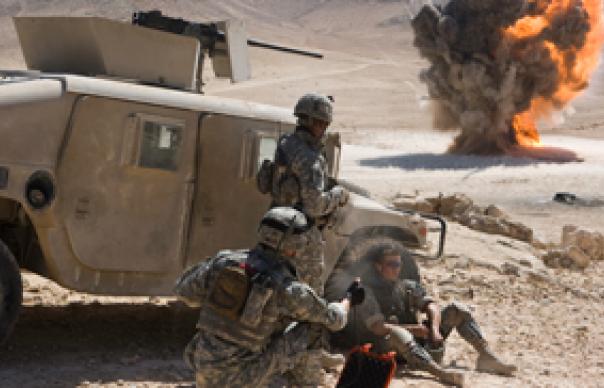
2001: Black Hawk Down
2009: Inglourious Basterds

GOOD: 17

1941: Sergeant York
1942: In Which We Serve
1942: Mrs Miniver
1953: The Cruel Sea
1957: Paths of Glory
1958: Ice Cold in Alex
1965: Von Ryan's Express
1967: The Dirty Dozen
1970: Patton
1970: Tora! Tora! Tora!
1981: Das Boot
1986: Platoon
1998: The Thin Red Line
2001: Enemy At The Gates
2004: Downfall
2008: The Hurt Locker
2014: American Sniper

AVERAGE: 17

1930: All Quiet on the Western Front
1937: La Grande Illusion
1949: Twelve O'Clock High
1949: Sands of Iwo Jima
1955: The Dam Busters
1962: Lawrence of Arabia
1962: The Longest Day
1963: The Great Escape
1964: 633 Squadron
1969: Battle of Britain
1969 Oh! What A Lovely War
1970: M*A*S*H
1977: A Bridge Too Far
1977: Cross of Iron
1981: Gallipoli
2006: Flags Of Our Fathers
2014: Fury

BELOW AVERAGE: 6

1968: Where Eagles Dare
1969: Hell in the Pacific
1978: The Deer Hunter
1980: The Big Red One
1999: Three Kings
2001: Behind Enemy Lines

NOT LISTED: 1

1916: The Battle of the Somme (documentary)


50 Great War Films: American Sniper


Directed by Clint Eastwood - 2014 poster

Well, I've reached the end. In fact, I have watched 48 films out of the Great 50. The Steel Helmet (1951) is not available in DVD in a 'straight' English version, let alone with subtitles; I have a DVD of Schindler's List (1993) but decided against viewing it because of its subject matter. I taught the Holocaust over several years and, frankly, don't want to be reminded of the sheer evil that humanity can inflict on its fellow beings.

So, what of American Sniper? I must admit, I was impressed with the acting, particularly of Bradley Cooper (Chris Kyle) and Sienna Miller (Taya Kyle) and thought Clint Eastwood's directing was solid and focused. Not knowing the real-life story, I was somewhat shocked at the end to read of Kyle's death, ironically at a shooting range, shot by a U.S. veteran suffering from PTSD. How ironic, some would say. I also found the Special Feature - One Soldier's Story: The Journey of American Sniper - very interesting, especially hearing the real Taya talking about her husband. It also explained why the screenwriter and director decided to include more of the 'home background' in the film. Previous war movies I have watched felt that the addition of a love interest etc. was simply there for Box Office reasons. This time it was integral to the story of a man almost obsessed by conflict but then traumatised by it, as he watched his buddies get shot or die later of their wounds. When asked by a Veterans Affairs psychiatrist if he is haunted by all the things he did in the war, he replies, it is all the guys [he] couldn't save that haunts him.

Chris and Taya Kyle

When the film started with a deer being hunted and shot, I thought Oh! not another Robert de Niro effort! But the movie was far superior to The Deer Hunter. Bradley Cooper, who bulked-up considerably for the part, gave an intimate and harrowing character study which clearly got across the physical and psychological toll exacted on a human being on the front line of warfare. His first kills are, tragically, a young boy and a woman about to attack Marines with an anti-tank grenade. 

Taking aim

A Bounty on his own head, Kyle is tasked with finding and killing a n opposition sniper, Mustafa (an Olympic Games medalist from Syria); this he does, with a long distance shot at 2,100 yards, but in doing so he exposes his team to armed insurgents. Only then does Kyle tearfully call his wife, saying it was time to come home. It was his fourth harrowing combat duty.

I liked his father telling Kyle that there were three types of people in the world: sheep, who were led, wolves who were predators, and sheepdogs - who were blessed with the gift of aggression and the overpowering need to protect the flock. A rare breed! Also the exchange, when first meeting Taya. Kyle says there were three things to worry about in life - ego, booze and women. She responds they are all there then! Another memorable phrase was: Fallujah was bad. Ramadi was worse. This shit is fucking biblical.

The film grossed $547.1 million worldwide against a budget of around $58 million. It was the highest-grossing war film of all time (breaking Saving Private Ryan's record) and was Eastwood's highest-grossing movie to date. Reviews were generally favourable. Todd McCarthy of The Hollywood Reporter called the film a taut, vivid and sad account of the brief life of the most accomplished marksman in American military annals. Another critic said it was a subdued celebration of a warrior's skill and a sorrowful lament over his alienation and misery. There were negative viewpoints. One suggested it viewed Iraqis as savages and that it furthered ignorance, fear and bigotry. Another echoed this, by saying the film was dangerous due to mutilating the classic hero's journey into a simplistic, brutal and sadistic destruction of "evildoers". Eastwood's response was that his film showed what war does to the people left behind...to the family and the people who have to go back into civilian life


One cannot leave without commenting on a scene which proved a distraction to viewers and became a cause celebre: the fake baby!

2015 DVD

Sunday, 30 May 2021

Galt's 'The Entail or The Lairds of Grippy' 1823


First edition - published December 1822

After three single-volume publications by John Galt (The Provost, The Steam-Boat, The Gathering in the West) we have only his second three-decker (after Sir Andrew Wylie of that Ilk). He must have felt it merited the Dedication he made to King George IV and, by and large, his critics thought he was right. Essentially, the tale is that of a single-minded Scotsman, Claud Walkinshaw, who was determined to regain an inheritance lost by his grandfather. He does not command affection. His behaviour towards his devoted bairnswoman, Maudge Dobbie, is disgraceful. She brings up the pennyless orphan Claud in a garret-room in the Saltmarket, Glasgow but is thanked for her pains by being cast-off as he gained adulthood. Claud not only dominates the story until well into the second volume but, even after his death, his perverse behaviour towards his eldest son and his wife - in fact, towards anyone and anything which gets in the way of his dream - comes back to bite him. He resolved to marry, and beget children, and entail the property, that none of his descendants might ever have it in their power to commit the imprudence which had brought his grandfather to a morsel, and thrown himself on the world.

He married Miss Girzy Hypel, the only daughter of Malachi Hypel, the Laird of Plealands, of legendary litigiousness. Claud actually dislikes her but she is the heiress to the neighbouring Hypel estate. Heaven may forgive the aversion I had to her, but my own nature never can. Claud can never be content, his mania gives him no peace: I sold my soul to the Evil One in my childhood, that I might recover the inheritance of my forbears...I stifled the very sense o' loving-kindness within me. In fact, he is constantly fighting against his own conscience, enduring the gnawings of remorse and not lacking the leaven of original virtue. As he confesses to his lawyer, Frae the very dawn o' life I hae done nothing but big and build an idolatrous image; and when it was finished, ye saw how I laid my first-born on its burning and brazen altar.

 It is Girzy who, after Claud's death, dominates the second half of the story as Leddy Grippy. Her father introduced her to Claud: Is na she a coothy and kind creature? She'll make you a capital wife. -...Man, it would do your heart gude to hear how she rants among the servan' lasses, lazy sluts...I trow Girzy gars them keep a trig house and a birring wheel. I liked the cross-reference to Galt's The Gathering in the West - the name of Mrs Walkinshaw on a brass plate, not quite so large as the one that the Lord Provost of the royal city sported on the occasion of His Majesty's most gracious visit... The Leddy is a fascinating amalgam of selfishness and generosity, egotistical but affectionate - Claud had to put up with the speat of her clatter. The problem for an English reader, both in 1823 and now, is that whenever Claud or Girzy speaks, it is in West Country Scots and, unless one is forever looking up words in one's Scottish Dictionary, it is best to skim over a portion of what they say.  One of Galt's London friends called the use of Scots its heathenish fault. All the younger members of the family and most other characters speak the King's English. The other problem, as the tale wears on, is keeping track of just who is who. Looking back, it would have been wise to construct a Family Tree as one went along.

There are some lovely touches of typical Galt humour. The funeral  of Malachi Hypel is a case in point - the failure to realise the body had not accompanied them to the churchyard, the lurching of the coffin onto the ground the second tine around, and two carriers falling into the grave, head foremost, with the coffin itself. In fact, the whole plot revolves round a series of deaths: Charlie, Claud's eldest disinherited son; Claud himself; one of Claud's third son's twins; Betty Bodle, the wife of Walter, Claud's second son; Walter's only child, also called Betty Bodel. All within a year. One chapter commences, Death, it is said, rarely enters a house without making himself familiar to the inmates. It certainly was a regular visitor in The Entail. Fortuitously for James Walkinshaw, the 'rightful' heir of Claud - being the eldest/only son of the eldest disinherited Charlie, survives to claim his inheritance, due to a further series of fortuitous deaths - that of Walter and then George (in a well-written chapter on a shipwreck off Cape Wrath -  is Galt copying Scott's The Pirate for his scene?). His sister Mary, a mild and unobtrusive girl, also marries happily.  One also warms to the fact that, at last, Mrs Charles, Bell Fatherlans, (Charles' long-suffering and poverty-stricken widow, lives to see her children deservedly well settled.)  As Mrs Eadie remarks, Death has performed his task... It is Mrs Eadie who is the most unsatisfactory character in the tale. Is her improbability (second-sight etc.) another imitation of Scott's The Pirate - the equally unlikely Norma?

Inevitably, due to the novel's plot being based on a legal device, lawyers and the law are regularly involved. I found it interesting that the benevolent lawyer, who tried to stop Claud from ruining his eldest son's future, was named Mr Keelevin.  This surname was the used as the pseudonym of Andrew Picken for his Tales and Sketches of the West of Scotland (1824) The other two, roguish, lawyers Threeper and Pitwinnoch are well drawn.

I noted the reference to Dr. Pringle - of The Ayrshire Legatees - preaching at the Wynd Kirk. The fact that Mary and Ellen just happen to be on the cliffside at the time of the shipwreck leading to George Walkinshaw's drowning just has to be put down to coincidental poetic licence,

Leddy Grippy's departure from this mortal coil is wonderfully commented upon, with Galt taking good-humoured aim at his critics:
Her doleful exit from the tents of Time, Law, and Physic, it is now our melancholy duty to relate, which we will endeavour to do with all that good-humoured pathos for which we are so greatly and so deservedly celebrated. If nobody says we are so distinguished, we must modestly do it ourselves, never having been able to understand why a candidate for parliament or popularity should be allowed to boast of his virtues more than any other dealer in tales and fictions.

The Entail was praised by Walter Scott, Lord Byron and Coleridge (the former two claiming they had read the work three times). Keith Costain (in John Galt 1779-1979) calls the work Galt's masterpiece, arguing that the fusion of tragic with comic elements is the secret of its power. Few characters come out of the tale well - a contemporary reviewer (in the Literary Gazette) spoke of the moral ugliness of the Walkinshaws, a most unamiable and sordid race. However, the story of tragic falls and comic redemption is a rattlingly compelling one. James Walkinshaw, seemingly due a tragic fate like his father Charles, actually wins through to live in well-off contentment.

Saturday, 29 May 2021

50 Great War Films: Fury


Directed by David Ayer - 2014 poster

I am quite willing to believe many critics and viewers found/find this movie not only authentic but exciting. I saw the 5* and 4* credits on the front of the DVD case as well as being given a personal recommendation, so I was looking forward to watching what is my penultimate film of the Great Fifty. So, why was I mildly disappointed, even on one or two occasions wanting it to get a move on? I found the beginning scenes dull (if understandable) and the wimp Norman (Logan Lerman) irritating beyond words. It reinforced my narrow-minded approach to 'wet' males! The other members of the crew may have been battle-hardened but they were really unsympathetic as characters.


Private Norman "Machine" Ellison and Sergeant Don "Wardaddy" Collier

One problem is that, although the acting and filming of the inside of a tank was realistic - getting across the sheer claustrophobia of it all - it can get rather dull rather quickly! When the scenes focused on the tank battles, particularly where the superior German SS Tiger tank outguns the other three U.S. Sherman tanks and appears impervious to their firepower, and the final scene when 'Fury' (immobilised by a landmine) inflicts heavy casualties on approaching German soldiers.  I endured the rather drawn-out scene, when the three drunken tank crew (Shia LaBeouf as Boyd "Bible" Swan, Michael Pena as Trini "Gordo" Garcia, and John Bernthal as Grady "Coon-Ass" Travis) muscle in on the German women's apartment, where Norman and Wardaddy (Brad Pitt) are having a meal. It was inevitable that the one house destroyed (and both women killed) by a German air raid had to be that one. Even the last scene let drama control the timing - the German soldiers took a hell of a long time to get to the tank, after being first spotted by Norman; and their attacks on the tank itself only took place between bouts of crew dialogue!

The critics were generally favourable, but one wrote that Brad Pitt plays a watered-down version of his 'Inglourious Basterds' character in this disappointingly bland look at a World War II tank crew. Another said that much of Fury crumbles in the mind. Filming took place in Hertfordshire, Oxfordshire and various locations in the North West of England. The movie grossed $211 million worldwide against a budget of $68 million.

2015 DVD

Sunday, 23 May 2021

50 Great War Films: Inglourious Basterds


Directed by Quentin Tarantino - 2009 poster

What a film! From the haunting music of The Green Leaves of Summer (remember The Alamo?) backing the suspense-filled start as an SS car and outriders slowly approach a French farmhouse, to the carving of the Nazi Swastika on Standartenführer Hans 'The Jew Hunter' Lander's forehead, the viewer is regularly caught off balance. There may have been mixed reactions from the critics (more of which below) but I enjoyed the movie; I found the grisly scenes horrific but the black humour on my wavelength! No wonder the film received an 8-11 minute standing ovation at its first screening at Cannes. 

'The Jew Hunter' meets the French farmer

Tarentino has said that the opening scene, where Lander (superbly played by the Austrian actor Christoph Waltz) meets and silkily chats to the French farmer (also well acted by Denis Ménochet as Perrier LaPadite), is his favourite thing...he's ever written. The terrified three daughters, the pouring of the glass of milk, the camera shot of the Jews hiding below the floorboards, swiftly builds to a denouement you know is coming. Lander's charm turns to menace - the ghastly shooting of the Jews through the floor, Zoller's aiming of his gun at the escaping Shosanna Dreyfus (Mélanie Laurent) - all send a chill down one's spine.

Essentially, there are two plots, both aimed at assassinating Hitler and other top Nazis - one by a team of Jewish American soldiers, led by Lieutenant Aldo (Brad Pitt - who was adequate, but no more, and I could barely stand his accent!) - and the other by Shosanna (now reborn as Emmanuelle Mimieux and owner of a small cinema). The story is preposterous but good fun. Scenes which stick in the memory are mainly the horrific ones (no wonder the DVD has an 18 certificate, with the warning, contains strong, bloody violence). The scalping of the Nazi soldiers by the 'basterds';  the bludgeoning to death by a baseball bat of their unbowed and uncowed leader; the carnage in the cellar of a bar (plenty of humour there with the bloodbath); Aldo torturing Bridget Von Hammersmark (Diane Kruger), by pushing his finger into a deep bullet wound in her leg to check is she really is their side's spy; the swastika carving at the end; all very Tarantino. The music playing when Stiglitz was rescued by the Basterds was brilliant.

Swastika carving here we come

The premiere of Stolz der Nation (to extol the achievements of Nazi marksman Frederick Zoller - brightly played by Daniel Brühl), which is attended by top Nazis, including Hitler, Goebbels and Goering, is a marvellous example of a gripping cinematic presentation.

The 'Jew Hunter', two Jews, an American and a Spy!

Although there is plenty of bloodshed - Emmanuelle shoots Zoller who in turn shoots her and both die in the projection room; as the spliced footage tells the audience they are about to be killed by a Jew, a huge pile of flammable nitrate film behind the screen is set alight; Hitler and Goebbels are gunned to death in their box; two Basterds, disguised as Italian film assistants, machine gun the audience until bombs strapped to their legs go off....  what's not to like! Churchill, on hearing of the plan, says The master race at play. All the rotten eggs in one basket. Blow up the basket. Another remark made me chuckle: Paris when it Sizzles!

Well, several critics did dislike the film. David Denby, of The New Yorker, argued that the film was too silly to be enjoyed, even as a joke. Christopher Hitchens was more caustic: said the experience of watching the film was like sitting in the dark having a great pot of warm piss emptied very slowly over your head. Roger Ebert probably hit the proverbial nail on the head when he wrote: the film was a big, bold, audacious war movie that will annoy some, startle others and demonstrate once again that [Tarantino] is the real thing, a director of quixotic delights. I wasn't keen on the credit list of eight guest stars - why can't they just be stars? Seeing Harvey Weinstein's name there gave pause for thought. These are minor quibbles. Christophe Waltz received the Best Actor Award at Cannes, as he did at the Golden Globes; and Best Supporting Actor Award at both the BAFTAs and Oscars. The movie is certainly one of the best in the 50 Films; whether it will make my Top Five is yet to be decided.

2009 DVD

Thursday, 20 May 2021

50 Great War Films: The Hurt Locker


Directed by Kathryn Bigelow - 2008 poster

The Movie won 6 Oscars and 6 BAFTAS; the former included Best Picture, Best Director and Best Original Screenplay. The vast majority of film critic were uniform in their praise. Rotten Tomatoes gave it an approval rating of 97%, based on 289 reviews. Roger Ebert, whom I have often quoted, wrote: The Hurt Locker is a great film, an intelligent film, a film shot clearly so that we know exactly who everybody is and where they are and what they're doing and why. Jeremy Remmer (who played the lead, Sergeant William James) was singled out for praise - Richard Corliss of Time magazine called his performance the highlight of the film, comparing Renner to a young Russell Crowe, He has the cool aplomb, analytical acumen and attention to detail of a great athlete, or a master psychopath, maybe both.

Into the Valley of Death?

Moments which stand out? The discovery of the body believed to be that of the boy 'Beckham' and Sergeant James' slicing into the body to extract explosives; the innocent Iraqi civilian with bombs strapped to his chest which explode after James is unable to cut them free; the blowing up of Lieut-Col. Cambridge.

'There she blows'

The Director, Kathryn Bigelow,  kept a tight grip on the story. An opening sentence, The rush of battle is often a potent and lethal addiction, for war is a drug, was apparent throughout in Remmer's performance. There was black humour. When asked "What's the best way to go about disarming one of these things?" Remmer replies, The way you don't die, Sir. When his two comrades - again well acted by Anthony Mackie as Sergeant Sanborn and Brian Geraghty as Specialist Owen Eldridge - root about in James' private box of 'goodies' and find detonators from previous exploits, he responds to their questioning looks, This box is full of stuff that almost killed me.

A practice explosion

Another tense moment is when James goes to retrieve his gloves from near where the practice explosion went off (see above picture) and Sanborn muses to Eldridge whether to kill the madman! The ending is not a surprise (once the viewer knows James is not going to get blown up) - when he return to a war zone - this time Afghanistan - to do the only thing I love. Since he says that in front of his little child back in the USA, it hits home that war is an uncompromising drug

There were criticisms, of course. Tara McKelvey from The American Prospect felt it was pro-U.S. Army propaganda and a most effective recruiting vehicle for the U.S. army. Of course, to the forefront was the Australian 'journalist' John Pilger, to whom anything that Australia, the USA or the UK (or probably any country in the Western First World) carry out is anathema. He criticised the film as it offers a vicarious thrill via yet another standard-issue psychopath high on violence in somebody else's country where the deaths of a million people are consigned to cinematic oblivion. He has a point, but all his utterances are so jaundiced (I wonder if he ever smiles) and one-sided that it's hard to agree with anything he writes. No, my problem with the film was, whilst recognising its good cinematic qualities, once or twice I felt like shouting Get on with it! The ambush in the desert dwelt too long on the dead bodies etc. I think I'm saying that it was not my kind of film. I certainly don't want to watch it again, whereas several of the other Great 50 I am sure I will return to.

2010 DVD

Monday, 17 May 2021

John Wilson's 'Lights and Shadows of Scottish Life' 1822


First edition - 1822

William Blackwood owed much of his magazine's success in its early days to the talents of J. G. Lockhart and his co-editor John Wilson (more widely known as 'Christopher North' in his later years). Wilson was most successful in his rapidly written pieces for Blackwood's and other journals and in his short stories and poems. His Lights and Shadows of Scottish Life obviously comes from contributions to Blackwood's magazine - Ian Campbell regards many of them as mere 'fillers'. Unlike Galt, whose work confronts and analyses the changes taking place in the first decades of the 19th century, it is rare to find this in Wilson's collection. Ian Jack is damning: Scottish sentimentality  of the most objectionable kind! It is clear to see the Kailyard of Ian Maclaren and James Barrie in the parochial idylls and domestic sketches of Wilson. One could argue that, at least, there were elements of humour in Maclaren, but I found none in Wilson's tales. At one stage I felt that the book should at least have been called Shadows and a few Lights of Scottish Life or, more accurately still, Dark Clouds and Lights...  

And yet, clearly, Wilson found an appreciative market - my 3rd edition is only a year after the book was first issued. Blackwood's republished it separately in 1846, 1853 and 1868 and combined it with The Trials of Margaret Lyndsay and The Foresters in 1865, 1867 and 1883. Moreover, there were several American editions - for instance, in 1834, 1846 and 1860. In 1823, only a year after its first publication, the USA brought out Stories, Selected from the Lights and Shadows of Scottish Life, for Youth, with engravings. Lucky children! There was even a chapbook, published in Glasgow c. 1855-60, of one of the stories, Blind Allan. A Tale

                           2nd USA ed. 1823                              'Chapbook' - Glasgow

Just as Elizabeth Hamilton's The Cottagers of Glenburnie was lapped up, there was sincere empathy for Wilson's writings on both sides of the Atlantic. It is very hard for someone reading them in the early 21st century - essentially an irreligious age or, rather, an age when so many regard traditional/authorised religion with indifference. The true literary historian should at least try and imagine life, and the contemporary readership, for what they were, not what we think they ought to have been. So-called progress, if it carries with it contempt for the past, is shallow.

So, what of the stories themselves?

Lights (11) - The Lily of Liddesdale - goodness reigns! Amy and Lily get their just desserts; Moss-Side - a bequest of £1500 and the recovery of his daughter from near death ensure the poor, but good, man Gilbert Ainslie can look forward to a better life; The Head-Stone  - father's death-bed/burial brings estranged sons together; The Lover's Last Visit - all comes good to those who deserve it; The Snow Storm - little Hannah Lee and her father survive a vicious snow-storm, thanks to the love of a young shepherd sweetheart; The Family-Tryst - determination and Christian virtue turn destitution into financial recovery; Blind Allan - hurrah, a blind man regains his sight thanks to a skilful surgeon and God; The Rainbow - Mills & Boon sentimentality, but at least there is 'light'; The Omen - well, the two rose bushes and the lovers did bloom, after being very droopy!; The Shealing - a more positive tale of ecumenicalism in a period of doctrinal discord and persecution. To be fair, Wilson saves the tale with the most 'light' until the last - Helen Eyre. It is also the longest, at 40 pages. The Orphan, an illegitimate offspring, finds happiness at last, proving that true love will overcome deep contemporary prejudice (so different from today, when probably as many children are born to the unmarried as from those couples who have pledged marriage vows). It is almost as if the author deliberately 'book-ended' the stories with powerful 'Lights'.

Shadows (7) - An Hour in the Manse - a late repentance doesn't quite erase bad behaviour; Sunset and Sunrise - watch the wife, she might be dead soon; The Minister's Widow - does the last sentence reveal the author's viewpoint? notwithstanding all I had seen and heard, I could not but think deserved almost to be called happy, in a world which even the most thoughtless know is a world of sorrow; The Snowstorm  - devotion wins outThe Elder's Death-Bed - quite a simple, affecting tale; The Elder's Funeral - a good man departs this mortal coil; The Poor Scholar - Ian Maclaren told a similar story 70 years' later. Gloom abounds. Even Bible-reading couldn't save the only child.; The Forgers - commences, "Let us sit down on this stone seat," said my aged friend, the pastor, "and I will tell you a tale of tears..."  Hangings follow.

Dark Clouds (3) - The Twins - a pure white marble stone in a graveyard of two children asleep in each others arms reflects a tragic tale; Lilias Grieve - even though an 'angel' seemingly is sent from Heaven to save an old couple from being executed by soldiers, it is a pretty disturbing story of cruelty; The Baptism - at least the 'right' beings perished, the horrible persecuting soldiers!

Thunderstorms (3) - The Covenanter's Marriage Day - oh dear, oh misery me. The newly-weds, slaughtered by soldiers were laid down together in a mournful bed; Simon Gray - deep, deep gloom with no 'light' at all. How, after such a miserable story, Wilson could end it with the expired minister, lying on his dead family's tombstone where the expression of the dead man's countenance was perfectly serene - and the cold night had not been felt by Simon Gray. Nonsense!!; Consumption - this tale is beyond parody, sickly and morbidly sentimental. It ends: Kiss - Oh kiss me once before I die!" He stooped down, and she had just strength to put her arms round his neck, when, with a long sigh, - she expired. It is a precursor to the real-life sad story of the three Brontë sisters. How could any author write It was even a sublime satisfaction to know that God was to call them away from their mortal being unsevered... ugh!

Now to return to John Galt and, hopefully more 'Light' and Humour.
--------------------------------------------------------

I have been re-reading (8th August) Francis Jeffrey's Secondary Scottish Novels (Edinburgh Review, October 1823). He was clearly not much of a fan, although they do praise Wilson's beautifully and sweetly written style... in a soft spirit of humanity and gentlenessHe charges the style with being too elaborate and uniform...we had marked some passages for censure, and some for ridicule - but the soft-heartedness of the author has softened our hearts towards him - and we cannot, just at present, say anything but good of him.